
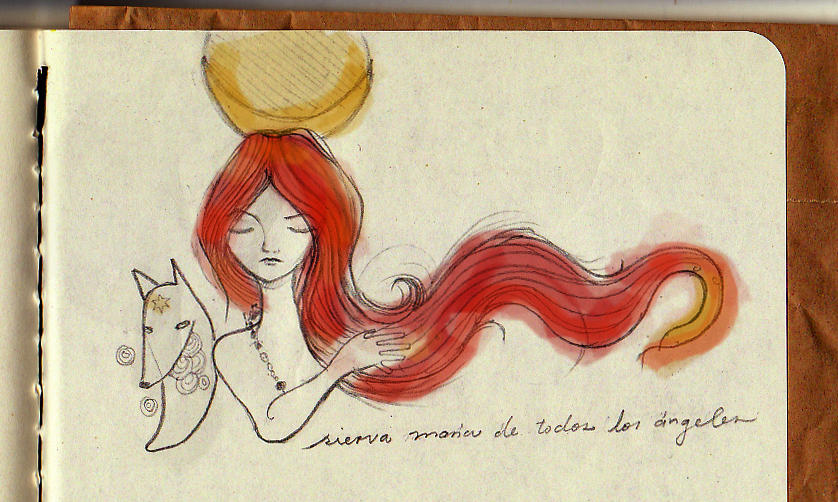
Imagen de/Image by DeeAlt (Nov 8, 2011)
Universidad Anáhuac México ●
La complejidad de los sentimientos humanos impide que éstos puedan definirse únicamente con palabras. Si hiciésemos un esfuerzo por identificar lo que caracteriza al amor, habría que hacer referencia a su dualidad. Mientras que éste puede ser racional, también resulta ser emocional. De la misma manera como puede involucrar al colectivo, puede sólo aludir al individuo. Se trata de un sentir enredado que, aunque hace referencia a los momentos más entrañables de nuestras vidas, suele convertirse en una fiera sin límites.
Más allá de las afectaciones que pueda producir de manera personal, resulta evidente que el amor es una experiencia que define a la especie. De la mano con la autonomía y la racionalidad, la capacidad de sentir afecto por otros semejantes suele relacionarse exclusivamente con ser humano.
Alejado de una imagen romantizada y sintética, Gabriel García Márquez propone una historia donde el amor es analizado desde ángulos inusuales. Considerándolo como una relación sentimental entre dos individuos que genera una alteración en la vida de cada uno de ellos, el autor colombiano construye un universo sentimental sin fronteras establecidas.
¿Quién fue Gabriel García Márquez?
Rodeado de playas caribeñas, el autor nace en el norte de Colombia el 6 de marzo de 1927. Tan pronto termina sus estudios básicos, elige la licenciatura en Derecho con aspiraciones de cruzar las fronteras; no obstante, ese camino lo encuentra al poco tiempo en el periodismo. García Márquez escala a gran velocidad la montaña editorial tras convertirse en parte del «Grupo de Barranquilla», quien lo conecta con obras influyentes de Faulkner, Woolf, Hemingway y Kafka.
Gracias al contacto con las historias cotidianas de los periódicos, García Márquez encuentra la inspiración que lo lleva a tejer las propias. Su primera obra, La hojarasca, se publica en 1955. Ese año viaja por primera vez a Europa, factor que le permite conocer otros entornos e ideas innovadoras. Tales recorridos lo vincularon con individuos que manejaban idioma y tenían rasgos y valores completamente distintos a los que estaba habituado.
Poco después, el colombiano decide profundizar su experiencia periodística radicando en Caracas, La Habana y Nueva York. Su estancia en tales ciudades le permitió conocer de primera mano los eventos más relevantes de la década; entre ellos, la Revolución Cubana. García Márquez entabló una estrecha amistad con Fidel Castro, quien alimentó sus ideales políticos progresistas y el deseo por establecer completa justicia social en el planeta.
En su andar por la publicidad y las artes escénicas, Gabriel García Márquez conoce a Carlos Fuentes. El escritor mexicano lo invita a colaborar con él en el guión de cine para El gallo de oro, obra de la pluma de Juan Rulfo. Ese proyecto le permite conocer México, país que sería su morada por el resto de su vida y que impulsaría su carrera en gran medida. De hecho, residiendo en San Ángel, escribe la obra que lo llevaría a ganar el Premio Nobel de Literatura en 1982. García Márquez fue, en su momento, el escritor más joven en obtener el reconocimiento (sólo después de Albert Camus).
En cuanto a sus relaciones personales, el amor que nació por su esposa desde la infancia, Mercedes Bacha, puede verse reflejado en todas sus obras literarias. De la misma manera, su forma de percibir el mundo influyó en la educación que impartió a sus hijos: Rodrigo y Gonzalo.
El acervo literario producido por Gabriel García Márquez contempla novelas, reportajes novelados, cuentos, obras periodísticas, memorias, obras de teatro, discursos y guiones cinematográficos. La narrativa de tales piezas solía estar estrechamente relacionada con sus vivencias personales. Historias como la que sostiene a Crónica de una muerte anunciada (1981), por ejemplo, hacen referencia a experiencias muy cercanas al escritor. En ese caso específico, la historia se refiere al asesinato de su amigo; se llevó al papel veintisiete años después de sucedido.
¿Por qué señalar «Del amor y otros demonios» (1994)?
Para analizar el texto, es necesario hacer una breve sinopsis…
Al interior de un concurrido mercado, un perro revuelca mesas y muerde a cuatro personas: tres esclavos negros y Sierva María de Todos los Ángeles, niña de doce años con una envidiable cabellera. La chiquilla, en busca de todo lo necesario para su celebración de cumpleaños del 7 de diciembre, había decidido acompañar a la sirvienta de compras. A pesar de que el percance es ignorado por la familia en un inicio, pronto se complica generando fiebres y otros malestares.
Dado que se presentan dos posibilidades de diagnóstico – la científica (i.e. contagio de rabia) y la religiosa (i.e. demonio) – los padres de Sierva se ven obligados a tomar una decisión. ¿Deberían enviarla a un hospital o a un convento? Optan por lo segundo, contemplando el convento de Santa Clara. Una vez establecida, el obispo elige a Cayetano Alcino del Espíritu Santo Delaura y Escudero como el encargado del exorcismo de la hija del marqués.
A pesar de que la labor de Cayetano inicia siendo meramente profesional, pronto éste desarrolla sentimientos amorosos por Sierva María. Sus emociones suben de nivel conforme avanza la trama, produciendo eventos extraordinarios como son los intentos de escape del convento o las estancias nocturnas en el cuarto de la niña.
Tras varias semanas, el sacerdote es descubierto y apresado. Sierva María se deprime y deja de avanzar en los tratamientos para el exorcismo, generando que se tomen medidas más severas. Pronto pierde el pelo y la posibilidad de convivir con otros. Muere, hundida en una desgarradora soledad.
Del amor y otros demonios se trata de un “libro único”. Es decir, no existen secuelas o precuelas en torno a la historia que presenta. Existe una película que se basó en el texto. Se nombró de la misma manera y fue producida por especialistas de Costa Rica y Colombia. No hay duda: el libro presenta polémicas temáticas que suelen atraer a millares de lectores. Es evidente que García Márquez prefería vivir en torno a la controversia. Para entenderlo habría – tan sólo – que releer los altercados en los que se involucró durante su juventud. Sin embargo… creo que más allá de los límites que transgrede la historia, lo que ésta nos permite hacer es evaluar la complejidad de los sentimientos. Así como mencionaba en un inicio, el amor va más allá de una relación de pareja heterosexual o familiar paternal. Se trata de la palabra que se asigna al sentir más confuso de todos. Uno en constante evolución, interpretación o… ¡confusión!
Además, me parece que los personajes de esta historia permiten ver cómo el autor daba importancia al reconocimiento de las minorías. La servidumbre, por ejemplo, tiene gran influencia en el convivir cotidiano y suele ser ignorada.
Gabriel García Márquez poseía una capacidad narrativa excelsa. Su elección de términos permite leer con máxima fluidez y comodidad. Los sentimientos plasmados en las páginas vinculan al lector inevitablemente y lo dejan “con ganas de más”.
Uno de los más grandes. ✦
Exorcising the demon of love
Universidad Anáhuac México ●
The complexity of human feelings prevents them from being defined exclusively with words. If we were to try to identify what characterizes love, we would have to refer to its duality. While it can be rational, it can also be emotional. In the same way that it can involve the collective, it can only refer to the individual. It is a tangled feeling that, although it refers to the most endearing moments of our lives, often becomes a beast without limits.
Beyond the effects it may have on a personal level, it is clear that love is an experience that defines the species. Hand in hand with autonomy and rationality, the ability to feel affection for others is usually associated exclusively with being human.
Far from a romanticized and synthetic image, Gabriel García Márquez proposes a story where love is analyzed from unusual angles. Considering it as a sentimental relationship between two individuals that generates an alteration in the life of each of them, the Colombian author builds an emotional universe without established borders.
Who was Gabriel García Márquez?
Surrounded by Caribbean beaches, the author was born in Northern Colombia on March 6, 1927. As soon as he finished his basic studies, he chose a degree in Law with aspirations of crossing borders; however, he soon found that path in journalism. García Márquez quickly climbed the publishing ladder after becoming part of the «Barranquilla Group», which connected him with influential works by Faulkner, Woolf, Hemingway, and Kafka.
Thanks to the contact with everyday stories through the journal, García Márquez found the inspiration that led him to weave his own. His first work, La hojarasca, was published in 1955. That year he traveled to Europe for the first time, an experience that allowed him to get to know other environments and formulate innovative ideas. Such trips led him to contact individuals who spoke his same language, but that had traits and values completely different from those he was used to.
Shortly after, the Colombian decided to deepen his journalistic experience by living in Caracas, Havana and New York. His stay in these cities allowed him to experience first-hand the most relevant events of the decade; among them, the Cuban Revolution. García Márquez established a close friendship with Fidel Castro, who nurtured his progressive political ideals and desire to establish complete social justice on the planet.
During his time in advertising and the performing arts, Gabriel García Márquez met Carlos Fuentes. The Mexican writer invited him to collaborate with him on the film script for El gallo de oro, a work by Juan Rulfo. This project allowed him to get to know Mexico, the country that would be his home for the rest of his life and that would greatly boost his career. In fact, while living in San Ángel, he wrote the work that would lead him to win the Nobel Prize for Literature in 1982. García Márquez was, at the time, the youngest writer to receive the recognition (only after Albert Camus).
As for his personal relationships, the love he felt for his wife since he was young, Mercedes Bacha, can be seen reflected in all his literary works. In the same way, his way of perceiving the world influenced the education he gave to his children: Rodrigo and Gonzalo.
The literary compilation produced by Gabriel García Márquez includes novels, fictionalized reports, short stories, journalistic works, memoirs, plays, speeches, and film scripts. The narrative of such pieces was often closely related to his personal experiences. Stories such as the one behind Chronicle of a Death Foretold (1981), for example, refer to experiences very close to the writer. In this specific case, the story aludes to the murder of his friend; it was written down twenty-seven years after the event.
Why highlight «Of Love and Other Demons» (1994)?
To analyze the text, it is necessary to make a very brief synopsis…
In a crowded market, a dog knocks over tables and bites four people: three black slaves and Sierva María de Todos los Ángeles, a twelve-year-old girl with an enviable hair. The girl, looking for everything necessary for her birthday celebration on December 7th, had decided to accompany the servant shopping. Although the mishap is initially ignored by the family, it soon becomes complicated, causing fevers and other ailments.
Given two diagnostic possibilities – the scientific one (i.e. contagion of rabies) and the religious one (i.e. demon) – Sierva’s parents are forced to make a decision. Should they send her to a hospital or a convent? They opt for the latter, considering the convent of Santa Clara. Once established, the bishop chooses Cayetano Alcino del Espiritu Santo Delaura y Escudero to be in charge of the exorcism of the Marquis’s daughter.
Although Cayetano’s work begins as a purely professional one, he soon develops romantic feelings for Sierva María. His emotions rise in level as the plot progresses, producing extraordinary events such as attempts to escape from the convent or overnight stays in the girl’s room.
After several weeks, the priest is discovered and arrested. Sierva María becomes depressed and stops advancing in the treatments for the exorcism, causing more severe measures to be taken. She soon loses her hair and the possibility of getting along with others. She dies, sunk in a heartbreaking loneliness.
Of Love and Other Demons is a “unique book.” That is, there are no sequels or prequels around the story it presents. There is a movie that was based on the text. It was named in the same way and was produced by specialists from Costa Rica and Colombia. There is no doubt: the book presents controversial themes that usually attract thousands of readers. It is evident that García Márquez preferred to live around controversy. To understand it, one would only have to reread the altercations in which he was involved during his youth. However… I think that beyond the limits that the story transgresses, what it allows us to do is evaluate the complexity of feelings. As I mentioned at the beginning, love goes beyond a heterosexual couple relationship or a paternal family relationship. It is the word that is assigned to the most puzzling feeling of them all. One in constant evolution, interpretation or… confusion!
Furthermore, I think that the characters in this story allow us to see how the author gave importance to the recognition of minorities. Serfdom, for example, has a great influence on daily life and is often ignored.
Gabriel García Márquez had an excellent narrative ability. His choice of terms allows for maximum fluidity and comfort in reading. The feelings expressed in the pages inevitably bind the reader and leave him “wanting more.”
One of the greatest. ✦
Referencias/References:
GARCÍA MÁRQUEZ, G. (2015). Del amor y otros demonios. Ciudad de México: Editorial Planeta García
ZENTENO, J. (2007). Entre el amor y la intolerancia: Del amor y otros demonios de Gabriel García Márquez. La Colmena, núm. 56, pp. 107-116.
REDACCIÓN BBC (1999). Un siglo, diez historias: Gabriel García Márquez. BBC MUNDO. Consultado el 29 de septiembre de 2018, disponible en [http://www.bbc.co.uk/spanish/seriemilenio03.htm]
SANÍN, A. (2016). Gabriel García Márquez: entre la pluma, el humor y el fusil. Literatura: teoría, historia, crítica, vol. 18, núm. 1, pp. 181-194.
SWANSON, P. (2014). Gabriel García Márquez (1927-2014). Palabra clave, vol. 17, núm. 2, pp. 253- 256.

 El dossier de Lourdes
Deja un comentario