
Instituto Universitario de Investigación Ortega-Marañón – Universidad Complutense de Madrid ●
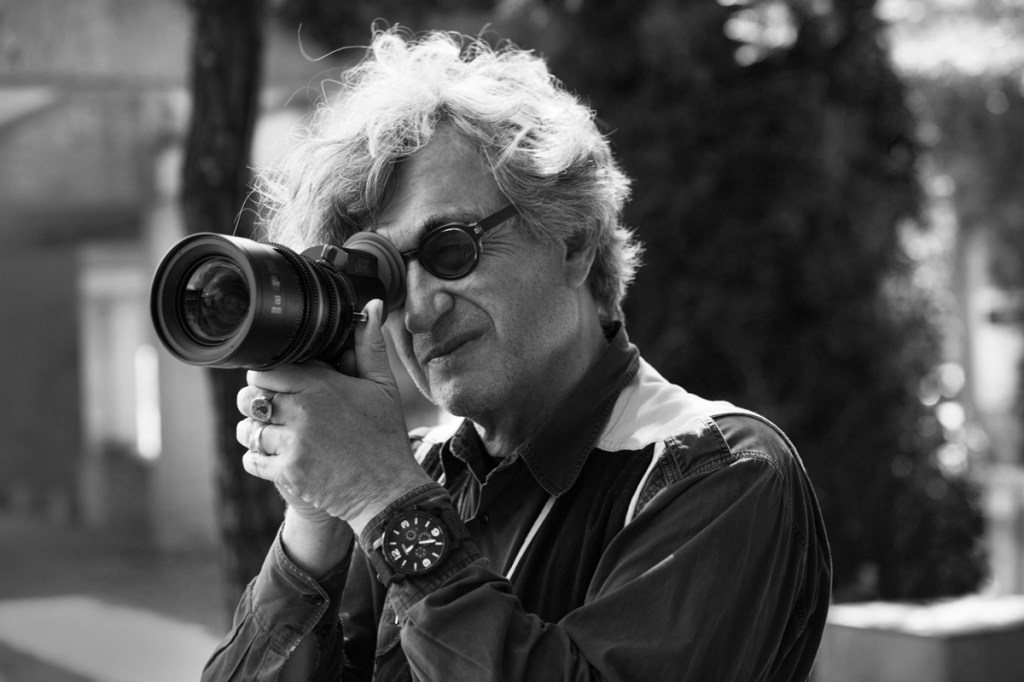
A inicios de la década de los ochenta y durante el festival de Cannes, el cineasta Wim Wenders se propuso reunir a los directores más destacados del momento y preguntarles: ¿el cine es un lenguaje que está por perderse o un arte a punto de morir? Uno por uno dio su punto de vista ante la cámara sobre el estado de su ocupación y la creatividad que le da vida, revelando la cruda verdad que acecha a la humanidad: somos gracias al cambio.
La propuesta de Wenders inicia con una toma en gran plano general de un imponente cedro hallado en la entrada del aeropuerto de Cannes. Este testigo silencioso ha visto nacer la fotografía y el cine, desafiando al tiempo y presagiando la incertidumbre del futuro. Resulta una manera ideal de iniciar el video, pues qué mejor símbolo para la fuerza del paso del tiempo y nuestra insignificancia como seres humanos que un gigante natural como ese. Tras un corte, nos hallamos al interior del cuarto número 666 del hotel Martínez. Ha llegado la hora de descubrir la verdad…
El primero en hablar es Jean-Luc Godard, un cineasta francosuizo, quien plantea el dilema de que las películas sean cada vez más similares a las series de televisión. Según menciona, la estética televisiva ha desplazado la grandeza cinematográfica y la comodidad del público ha llevado a la preferencia por historias conocidas. De acuerdo con sus palabras, ha muerto el cine hasta cierto punto, pero… eso no está mal, insiste. Es un momento de la vida y está bien marcharse. Hay que dejar entrar a lo nuevo.
Adicionalmente, aunque se trata de una grabación ochentera, pareciera que habla con voz de profeta: menciona que el confort de ver una película en la televisión frente a tu sillón – aunque tenga una trama muy similar a las que ya conoces – parece tener más peso que lo que puede ofrecerte la experiencia completa en una sala de cine. Enseguida menciona que el problema que él ve – y con el cual difiero – es que la televisión no se concentra en las historias. Probablemente, si pensásemos en las transmisiones que se hacían en aquellos tiempos esto aplicaría. Pero… poniendo los pies en la actualidad, la creatividad para escribir historias para televisión es latente y existe. Las series o películas transmitidas en televisión pueden también mantenerte al borde de tu sillón. No obstante… aquí entra a colación la «pregunta del millón»: ¿esto aplica para las transmisiones televisivas como tal o pensamos, más bien, en los servicios de streaming?
El francés Romain Goupil interviene, también, de manera sorpresivamente atinada. Todo está en la tecnología, de acuerdo con él. Ésta es la que convertirá a la televisión en un aparato increíble que pueda reproducir la película que uno desee en cualquier parte (¿no sería maravilloso poder mostrarle todos los dispositivos con los que contamos ahora?).
El cine, entonces, como arte y como lenguaje no ha muerto ni morirá. Se adaptará a las innovaciones tecnológicas para seguir contando historias. Como la energía: no se crea, ni se destruye; se transforma.
En un punto contrario, Susan Seidelman, originaria de los Estados Unidos, presume una perspectiva muy bella. La clave para ella es la pasión, pues las películas morirán cuando se pierda esa que tienen detrás. En ese momento, dejarían de tener la esencia que les da origen. Esto pareciera aplicar para todo el la vida: sin pasión, no hay entrega o compromiso. Sin ella, desaparece el arte y la belleza. Es lo que asegura nuestros logros y el único elemento que nos apoya para vencer los obstáculos.
En relativa concordancia con Seidelman, Werner Herzog rechaza el que la situación sea dramática o que no tenga solución, tal y como la pregunta de Wenders insinúa. Según él, no dependemos tanto de la televisión como para preocuparnos. El cine es único por su estética y la dinámica que implica (i.e. el individuo completamente absorto en la transmisión de una historia) y tiene un gran punto a su favor: no puede apagarse como la televisión.
Las contribuciones de Steven Spielberg a este video parecieran, personalmente, algo raquíticas. Está claro que para este año – 1982 – quizás ya se había encumbrado gracias a sus películas (no olvidemos que E.T., el extraterrestre es de ese mismo año), pero… sus palabras únicamente giran en torno al dinero. Es evidente que tuvo razón hasta cierto punto, pues entonces y ahora las producciones suceden si hay quién las financie, pero… asoció exclusivamente el lenguaje y el carácter artístico del cine con el poder adquisitivo. Insiste en que está seguro de que se trata de una industria que crecerá y se expandirá, señalando como riesgo a quienes tienen el control monetario y buscan multiplicarlo. ¿Visión estadounidense? Tal vez una casada con el cine sensacionalista del que habla R.W. Fassbinder, lejos de aquel más individual y original.
Por último, me gustaría destacar las palabras de Michelangelo Antonioni. El creador italiano se refiere a este dilema como uno generacional. Sí, el cine corre el riesgo de morir y la televisión se jacta por influir las mentes jóvenes… pero, se trata de dos épocas. A las personas de más edad siempre les costará trabajo adaptarse a las nuevas maneras de representar la realidad. Prueba de ello está en los adultos de mediana y avanzada edad que suelen atribuir lo que está mal a su alrededor a las nuevas tecnologías, olvidando que ellos mismos pudieron haber provocado muchos de los problemas que hoy se viven…
Independientemente de las perspectivas mostradas en el filme, el cine nos ha demostrado desde sus inicios que es rey de un lenguaje determinado, así como que resistirá por su habilidad para transformarse. Es decir, no ha muerto y se tendrá que adaptar a las nuevas maneras de presentarse. Seguramente, esto lo logrará gracias a sus fieles seguidores y a la consideración de las contribuciones que ha generado para la cultura contemporánea: aún hay luz para garantizar su supervivencia. Además, concuerdo con Robert Kramer cuando dice amarlo por su falta de reglas – habrá que trabajar por mantener ese tono anarquista. ¡Unámonos a aquellos que confían en su poder ante la incertidumbre! ✦
New narratives and challenges: the uncertain future of cinema
Instituto Universitario de Investigación Ortega-Marañón – Universidad Complutense de Madrid ●
Beginning the 80s, during the Cannes Film Festival, filmmaker Wim Wenders planned to gather the most prominent directors of the moment and ask them: is cinema a language that is about to disappear or an art on the verge of dying? One by one, they gave their point of view on camera about the state of their occupation and the creativity that defines it, revealing the harsh truth that haunts humanity: we are thanks to change.
Wender’s proposal begins with a long shot of an imposing cedar tree found at the Cannes Airport entrance. This silent witness has seen the birth of photography and cinema, challenging time and foreshadowing the uncertainty of the future. It is an ideal way to start the video, since there is no better symbol for the force of the passage of time and for our insignificance as human beings than a natural giant as such. After a cut, we find ourselves inside room number 666 of the Martínez Hotel. The time has come to discover the truth…
The first to speak is Jean-Luc Godard, a French-Swiss filmmaker who suggests there is a dilemma where films have become more and more similar to television series. According to him, TV aesthetics have displaced cinematic grandeur and the comfort of the public has led to a preference for familiar stories. He assures cinema has died to a certain extent, but… that is not bad, he says. It is a moment in life and it is good to leave and let it be. We must let the new in.
Additionally, even though this is an 80s recording, it seems like he had spoken with the voice of a prophet: he mentions that the comfort of watching a movie on TV in front of the couch – even if the plot is just like those you already know – seems to have more weight than what the full experience in a movie theater can offer you. He then mentions that the problem he sees – and with which I disagree – is that television does not focus on stories. Probably, if we think of the broadcasts that were made in those times, this could make sense; however… with our feet in the present, the creativity to write stories for television is latent and exists. Series or movies on the TV can also keep you on the edge of your seat. Notwithstanding, here comes «the million-dollar question»: does this apply to television broadcasts as such or are we thinking, rather, of streaming services?
Romain Goupil, French, also intervenes in a suprisingly accurate way. Everything has to do with technology, according to him. That is what will turn television into an incredible device that can play the film that you want anywhere (Wouldn’t it be wonderful to be able to show him all the devices we have nowadays?). Cinema, then, as an art and language has not died and will not die. It will adapt itself to technological innovations to continue telling stories. Like energy: it is neither created nor destroyed; it is transformed.
On the contrary, Susan Seidelman – originally from the United States – has a very beautiful perspective. The key for her is passion, because movies will die whenever the passion behind them ceases. At that moment, they would stop having the essence that gave them life. This seems to apply to everything around us: without passion, there is no commitment or dedication. Without it, art and beauty automatically disappear. It is what ensures our achievements and the only element that supports us to overcome obstacles.
In relative agreement with Seidelman, Werner Herzog rejects the idea that the situation is dramatic or unsolvable, as Wenders’s question suggests. According to him, we are not as dependent on television to be concerned. Cinema is unique for its aesthetics and the dynamics it implies (i.e. the individual completely absorbed in the transmission of a story) and it has one great thing in its favor: it cannot be turned off like television.
Steven Spielberg’s contributions to this video seem, personally, somewhat meagre. It is clear that by this year – 1982 – he had perhaps already become prominent thanks to his films (let us not forget that E.T. is from that same year), but… his words only relate to money. It is evident that he was right to certain extent, since then and now productions happen if there is someone willing to finance them, but… he exclusively associated the language and artistic character of cinema with purchasing power. He insists that he is sure that this is an industry that will grow and expand, pointing out as a risk those who have monetary control and seek to multiply it. An American vision? Perhaps one linked to the sensationalist movies R.W. Fassbinder talks about, far from the more individual and original ones.
Finally, I find important to highlight the words of Michelangelo Antonioni. The Italian creator refers to this dilemma as a generational one. Yes, cinema is in danger of dying and television prides itself on influencing young minds… but, there are two eras. Older people will always have a hard time adapting to new ways of representing reality. Proof of this is found in middle-aged and older adults who tend to attibute what is wrong around them to new technologies, forgetting that they may have caused many of the problems we are experiencing today…
Regardless of the perspectives shown in the film, cinema has shown us from the beginning that it is the king of a certain language, as well as that it will endure due to its ability to transform itself. That is to say, it has not died and will have to adapt to new ways of presentation. Surely, it will achieve this thanks to its faithful followers and the consideration of the contributions it has generated for contemporary culture: there is still light to guarantee its survivial. Furthermore, I agree with Robert Kramer when he says he loves it for its lack of rules – we will have to work to maintain the anarchist tone. Let us join those who trust its power in the face of uncertainty! ✦

 El dossier de Lourdes
Deja un comentario