
Instituto Universitario de Investigación Ortega-Marañón – Universidad Complutense de Madrid ●
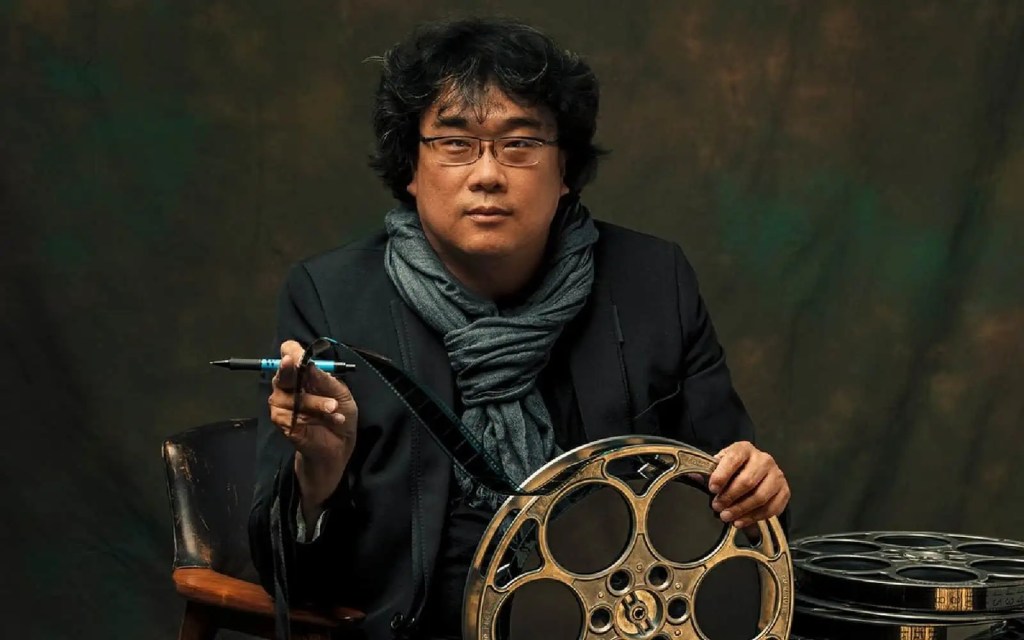
El cine de Bong Joon-ho es una sinfonía de elementos que desafía las convenciones narrativas y estilísticas, deslizándose entre géneros con una maestría que trasciende las etiquetas superficiales. En sus obras, así como señala Carlos F. Heredero en Bong Joon Ho: La reinvención de los géneros (2014), se fusionan una perspectiva distanciada, humor grotesco y realismo feroz. Lejos de ser el «Spielberg coreano», este director es un creador con un estilo único e inconfundible, arraigado en la realidad de su país de origen pero con resonancias universales.
Desde sus primeros trabajos, Bong Joon-ho ha explorado las complejidades de la condición humana, presentando figuras multidimensionales cuyas vidas son un eco de la discordancia entre sus sueños y la cruda realidad: desde héroes inesperados hasta villanos carismáticos, pasando por individuos marginados y desadaptados. “Los personajes de este director son personas cuyas vidas no encajan con sus sueños y sus personalidades tampoco encajan con sus aspiraciones.” (Heredero, p. 77) Uno de los aspectos más destacados del cine de Bong Joon-ho es su manejo magistral de la mirada, tanto en términos técnicos como narrativos. Desde el encuadre inicial hasta los momentos más íntimos, la visión de los personajes se convierte en un hilo conductor que guía al espectador a través de las complejidades del relato. En Mother (2009), esta mirada adquiere una relevancia aún mayor, ya que gran parte de la película se filma desde el punto de vista de la madre, interpretada brillantemente por Kim Hye-ja. La trama se basa en aquello que cada personaje vio, creyó ver o recuerda ver.
Nam Lee destaca la importancia de las expresiones faciales de la madre en Mother, subrayando cómo el filme se basa en ellas para comunicar incertidumbre, resignación y dolor. Bong Joon-ho utiliza la mirada de esta mujer como una ventana a su mundo interior, permitiendo al espectador adentrarse en sus pensamientos más íntimos y sentir su angustia de manera palpable. “Nos sentimos asfixiados, como si la propia angustia de la madre también nos apretara a nosotros.” (Heredero, p. 14) La secuencia inaugural de Mother es emblemática en este sentido. Como describe Heredero, la cámara se mueve con exactitud compositiva, cerrando gradualmente el encuadre alrededor del personaje principal mientras ésta se entrega a un baile que refleja su dolor y desesperación. Estas imágenes no sólo establecen el tono y la atmósfera de la película, sino que también encapsulan la obsesión que impulsa la narrativa hacia adelante.
Entre los elementos recurrentes en las películas de Joon-ho se encuentran las relaciones familiares, que ocupan un lugar central en su obra y reflejan las tensiones sociales y políticas de la sociedad coreana contemporánea. Como destaca Álvarez López, sus personajes son figuras marginadas y desadaptadas, cuyas vidas son un reflejo de los absurdos estridentes que caracterizan la realidad en Corea. Esta exploración de la convivencia doméstica se entrelaza con otros temas recurrentes en su cine, como la violencia, la injusticia social y el abuso de poder, creando una narrativa rica en matices y capas de significado.
La importancia de la mirada en el cine de Bong Joon-ho supera lo puramente técnico y se convierte en un elemento crucial de la narrativa. Como señala Juan Carlos Saloz en «Break+ cine asiático», las estructuras cinematográficas conservadoras han sido desafiadas por el éxito del cine surcoreano, que ha irrumpido en el escenario mundial con una fuerza arrolladora. En este contexto, películas como Mother destacan por su capacidad para fusionar géneros de manera heterogénea y explotar personajes diversos, navegando entre el drama familiar y el thriller con un toque de comedia negra característico del director. “Lejos de la moralina, el incisivo humor ácido de Bong retrata a una serie de personajes inadaptados y marginales pero que se comportan con una particular idiosincrasia y de una forma a veces mezquina.” (Díaz, p. 159)
La perspectiva de Bong Joon-ho, impregnada de influencias tanto occidentales como asiáticas, se convierte así en un reflejo de las mutaciones que están teniendo lugar en el mundo. Como sugiere Gérard Imbert en «Cine, representación de la violencia e imaginarios sociales» – texto presente en la compilación La mirada que habla… (2002) – , el cine contemporáneo no solo documenta lo que está sucediendo en el mundo, sino que también revela lo que permanece oculto a simple vista. En Mother, los ojos de la madre se convierten en un símbolo de resistencia ante la opresión y la injusticia, una ventana a un mundo marcado por la violencia y la intolerancia.
El formalismo de Bong Joon-ho, lejos de ser un mero ejercicio estilístico, sirve para sumergir al espectador en la mente y el corazón de sus personajes. Su cine se caracteriza por un uso inventivo del encuadre y la composición, así como por su atención al detalle y la profundidad de campo. Las películas suelen estar llenas de planos de seguimiento con cámara al hombro, travellings y planos fijos que capturan la esencia de las escenas cotidianas con una precisión máxima. Esta estética íntima y obsesiva se suma a la experiencia cinematográfica, sumergiendo al espectador en un mundo de emociones y dilemas morales. Mother presenta encuadres íntimos y expresiones faciales que se convierten en vehículos de emoción y verdad, transmitiendo la complejidad de los conflictos internos y externos que enfrentan los protagonistas. Cada plano es una invitación a explorar las profundidades de la psique humana, revelando capas de significado y subtexto que enriquecen la experiencia cinematográfica.
La película Mother puede considerarse como un monumento a la habilidad de Bong Joon-ho para conjugar tanto forma y contenido, como técnica y narrativa. Es una obra que logra trascender las barreras culturales y lingüísticas, enganchando a todo aquel que la consuma y generándole emociones diversas. A través de la vista de sus personajes, el director nos invita a contemplar la complejidad del mundo que habitan, explorando temas universales como el amor, la culpa y la redención. En última instancia, es esta mirada penetrante la que nos permite conectar con los protagonistas y experimentar su angustia y sufrimiento de manera visceral, trascendiendo las fronteras o los obstáculos para llegar al corazón mismo de la condición humana. ✦
The Power of the Gaze
Instituto Universitario de Investigación Ortega-Marañón – Universidad Complutense de Madrid ●
Bong Joon-ho’s cinema is a symphony of elements that defy narrative and style conventions, slipping between genres with a mastery than transcends superficial labels. His works, just like Carlos F. Heredero points out in Bong Joon Ho: The Reinvention of Genres (2014), merge a distanced perspective, grotesque humor, and fierce realism. Far from being the «Korean Spielberg», this director has a unique and unmistakable style, rooted in the reality of his country of origin but with universal resonances.
Since his earliest works, Bong Joon-Ho has explored the complexities of the human condition, presenting multidimensional figures whose lives echo the discordance between their dreams and harsh reality: from unexpected heroes to charismatic villains, to marginalized and misfit individuals. «This director’s characters are people whose lives do not fit with their dreams and their personalities do not fit with their aspirations». (Heredero, p. 77) One of the most outstanding aspects of Bong Joon-Ho’s cinema is his masterful use of the gaze, both technically and narratively. From the initial framing to the most intimate moments, the vision of the characters becomes a common thread that guides the viewer through the complexities of the story. In Mother, this gaze takes on even greater relevance, as much of the film captures the point of view of the mother, brilliantly played by Kim Hey-Ja. The plot is based on what each character sees, thinks they see or remembers seeing.
Nam Lee highlights the importance of the mother’s facial expressions in the movie, underlining how the film relies on them to communicate uncertainty, resignation, and grief. Bong Joon-Ho uses this woman’s gaze as a window into her inner world, allowing the viewer to enter her deepest thoughts and feel her anguish in a palpable way. «We feel suffocated, as if the mother’s own anguish is squeezing us as well». (Heredero, p. 14) The opening sequence of Mother is emblematic in these terms. As Heredero describes, the camera moves with compositional precision, gradually closing the frame around the main character as she engages in a dance that reflects her pain and despair. These images not only set the tone and atmosphere of the film, but also encapsulate the obsession that drives the narrative forward.
Among the recurring elements in Joon-Ho’s films are family relationships, which take a central place in his work and reflect the social and political tensions of contemporary Korean society. As Álvarez López points out, his characters are marginalized and eccentric figures, whose lives are a reflection of the strident absurdities that characterize reality in Korea. This exploration of domestic coexistence is intertwined with other recurring themes in his cinema, such as violence, social injustice, and abuse of power, creating a narrative rich in nuances and layers of meaning.
The importance of the gaze in Bong Joon-Ho’s films goes beyond the purely technical and becomes a key element of the narrative. As Juan Carlos Saloz points out in Break+ Asian Cinema (2021), conservative cinematic structures have been challenged by the success of South Korean cinema, which has burst into the world stage with overwhelming force. In this contexts, films like Mother stand out for their ability to fuse genres in a heterogeneous way and exploit diverse characters, navigating between family drama and thriller with a touch of black comedy, just like the director uses to. «Far from moralizing, Bong’s incisive acid humor portrays a series of misfits and marginal characters who behave with a particular idiosyncrasy and in a sometimes mean way». (Díaz, p. 159)
Bong Joon-Ho’s perspective, impregnant from both Western and Asian influences, becomes a reflection of the mutations taking place in the world. As Gérard Imbert suggests in «Cinema, Representation of Violence and Social Imaginaries» – text included in the complation The Gaze That Speaks… – contemporary cinema not only documents what is happening in the world, but also reveals what remains hidden to the naked eye. In Mother, the main character’s eyes become a symbol of resistance to oppresion and injustice, a window into a world marked by violence and intolerance.
Far from being a mere stylistic exercise, Bong Joon Ho’s formalism serves to immerse the viewer in the mind and heart of his characters. His cinema is characterized by an inventive use of framing and composition, as well as by his attention to detail and depth of field. Films are often charged with hand-held tracking shots, travelling shots, and still shots that capture the essence of everyday scenes with utmost precision. This intimate and obsessive aesthetic adds to the cinematic experience, immersing the viewer in a world of emotions and moral dilemmas. Mother features intimate framing and facial expressions that become vehicles of emotion and truth, conveying complexity of the internal and external conflicts faced by the main characters. Each shot is an invitation to explore the depths of the human psyche, revealing layers of meaning and subtext that enrich the cinematic experience.
The film Mother can be considered a monument to Bong Joon-Ho’s ability to combine both form and content, as well as technique and narrative. It is a work thata manages to trascend cultural and linguistic barriers, engaging everyone who consumes it and generating diverse emotions. Through the eyes of his characters, the director invites us to conteplate the complexity of the world they inhabit, exploring universal themes such as love, guilt, and redemption. Ultimately, it is this penetrating gaze that allows us to connect with the protagonists and experience their anguish and suffering in a visceral way, trascending borders or obstacles to reach the very heart of the human condition.✦
Referencias / References
Camarero, G. (Ed.). (2002). La mirada que habla (cine e ideologías). Ediciones Akal.
Heredero, C. (2014). Bong Joon Ho: la reinvención de los géneros. 59 Semana Internacional de Cine.
It’s Just Cinema. (22 de abril de 2021). Bong Joon-Ho: The Art of Transnational Cinema | Video Essay [Video]. YouTube. [https://www.youtube.com/watch?v=3wZ9ZoEEV_A]
Joon-Ho, B. (Director). (2009). Mother [Película]. CJ Entertainment.
Lee, N. (2020). The Films of Bong Joon Ho. Rutgers University Press.
Saloz, J. (2021) Break+ : cine asiático : Wong Kar Wai, Bong Joon-Ho, Akira Kurosawa, Takeshi Kitano. Héroes de papel.
Shkurny, A. (2021) Bong Joon-ho: The mastery of transnational directing. Filmustage. [https://filmustage.com/blog/the-mastery-of-transnational-directing/]

 El dossier de Lourdes
Deja un comentario