Madrid, España ●
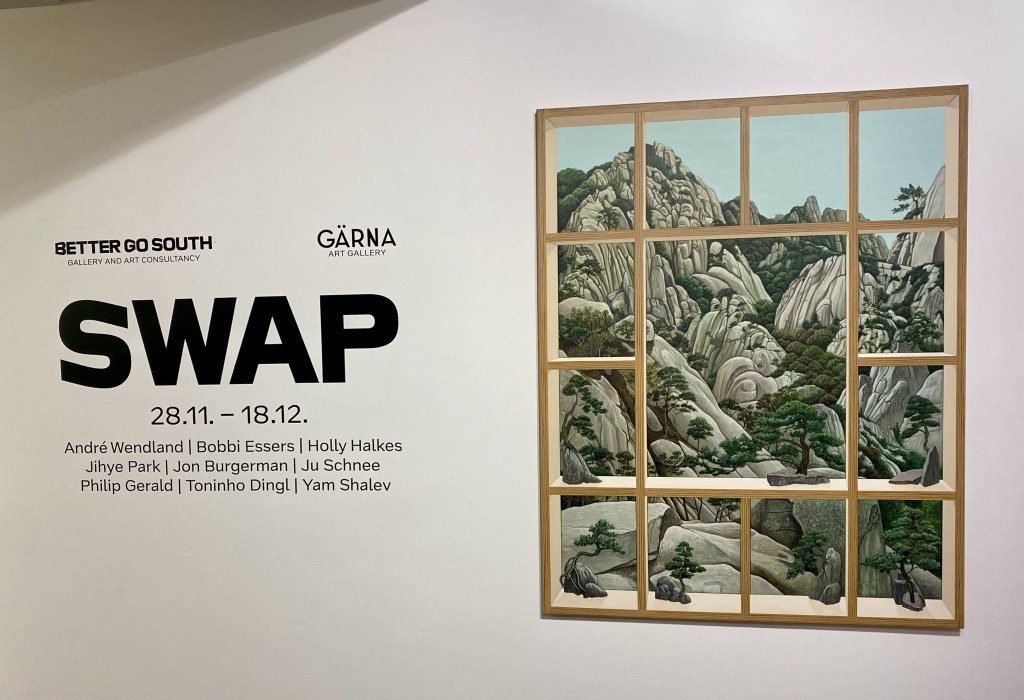
En un entorno global lleno de diversidad, el arte destaca como una forma única de comunicación que trasciende cualquier barrera cultural o lingüística. Esto es precisamente lo que busca SWAP: una colaboración entre dos galerías de arte, Gärna en Madrid y Better Go South en Berlín.
El proyecto reúne obras de artistas internacionales, tales como André Wendland, Bobbi Essers, Holly Halkes, Jihye Park, Jon Bugerman, Ju Schnee, Philip Gerald, Toninho Dingl o Yam Shalev. La intención es demostrar que el arte puede hablar un lenguaje común, independientemente de dónde se origine.
Entre el 28 de noviembre y el 18 de diciembre de 2024, Gärna acoge esta exposición que presenta una diversidad de piezas, mayormente pinturas al óleo y acrílico sobre lienzo. Más adelante, la muestra viajará a Berlín, reafirmando la conexión entre las dos ciudades a través de las obras. Las piezas no solo despliegan una variedad de estilos, colores y tamaños, sino que también invitan a reflexionar sobre la capacidad del arte para superar barreras culturales.
El título SWAP alude justamente al intercambio, no solo de obras de arte, sino también de perspectivas. Cada cuadro expuesto es un fragmento del mundo interno del artista, una ventana hacia emociones, ideas y conceptos que encuentran eco en quienes los observan, sin importar el idioma que hablen o el lugar de donde provengan.
A pesar de las diferencias inherentes entre el español y el alemán –dos lenguas con raíces y estructuras muy distintas–, el arte no necesita traducción. Es el lenguaje humano por excelencia, una forma de comunicación que, como señalaba uno de los artistas participantes, busca servir de «desanestesia». Frente a un mundo a menudo saturado de estímulos que adormecen nuestra sensibilidad, estas piezas intentan reactivar nuestra capacidad de sentir, de pensar y de maravillarnos.
La «desanestesia» resuena particularmente en las obras expuestas. Los trazos vibrantes de Yam Shalev, las formas abstractas de Ju Schnee y las texturas palpables de André Wendland desafían al espectador a reconectar con sus emociones más profundas. Más allá de ser objetos decorativos, estas obras exigen ser sentidas, vividas y experimentadas.
La exposición, además de celebrar el intercambio cultural entre España y Alemania, también subraya el papel del arte como catalizador de diálogo. Las galerías Gärna y Better Go South han concebido este proyecto con el propósito de crear un espacio en el que artistas y públicos de diferentes contextos puedan encontrarse y enriquecerse mutuamente.
La idea de que el arte es un lenguaje universal no es nueva, pero en SWAP cobra una relevancia especial al reunir piezas que, aunque diversas en estilo, comparten una vocación común: abrir la experiencia artística a todos. El arte aquí no es elitista ni hermético; es accesible, vibrante y profundamente humano.
Para quienes puedan visitar la exposición en Madrid o Berlín, SWAP promete ser mucho más que una muestra de pinturas. Es una invitación a explorar la esencia de lo que significa ser humano, a través de un idioma que no conoce fronteras. Ya sea que observes una pintura en Madrid o en Berlín, el mensaje será el mismo: el arte tiene la capacidad única de unirnos, de recordarnos que, más allá de nuestras diferencias, compartimos una humanidad común.
¿Ese no es acaso el propósito del arte? ✦
A Common Tongue
Madrid, Spain ●
In a global environment full of diversity, art stands out as a unique form of communication that transcends cultural and linguistic barriers. This is precisely the aim of SWAP, a collaboration between two art galleries: Gärna in Madrid and Better Go South in Berlin.
The project brings together works by international artists such as André Wendland, Bobbi Essers, Holly Halkes, Jihye Park, Jon Bugerman, Ju Schnee, Philip Gerald, Toninho Dingl, or Yam Shalev. Its intention is to demonstrate that art can speak a common language, regardless of where it comes from.
From November 28 to December 18, 2024, Gärna will host this exhibition, presenting a wide array of pieces, primarily oil and acrylic paintings on canvas. Later, the showcase will travel to Berlin, reaffirming the connection between the two cities through art. The pieces not only display a variety of styles, colors, and sizes but also invite to reflect on the power of art to overcome cultural barriers.
The title SWAP aptly refers to the exchange, not only of artworks but also of perspectives. Each exhibited piece is a fragment of the artist’s inner world, a window into emotions, ideas, and concepts that resonate with viewers, no matter their language or origin.
Despite the inherent differences between Spanish and German — two languages with distinct roots and structures — art requires no translation. It is the ultimate human language, a form of communication that, as one of the participating artists noted, seeks to serve as «de-anesthesia.» In a world often oversaturated with stimuli that dull our sensitivity, these pieces aim to reawaken our capacity to feel, think, and marvel.
This «de-anesthesia» is particularly evident in the exhibited works. The vibrant strokes of Yam Shalev, the abstract forms of Ju Schnee, and the palpable textures of André Wendland challenge the viewer to reconnect with their deepest emotions. Beyond being decorative objects, these works demand to be felt, lived, and experienced.
The exhibition not only celebrates the cultural exchange between Spain and Germany but also highlights the role of art as a catalyst for dialogue. Gärna and Better Go South have conceived this project to create a space where artists and audiences from different contexts can meet and enrich each other.
The idea that art is a universal language is not new, but in SWAP, it takes on special relevance by bringing together pieces that, despite their stylistic diversity, share a common purpose: to open the artistic experience to everyone. Here, art is neither elitist nor hermetic; it is accessible, vibrant, and deeply human.
For those who can visit the exhibition in Madrid or Berlin, SWAP promises to be much more than a display of paintings. It is an invitation to explore the essence of what it means to be human, through a language that knows no borders. Whether you view a painting in Madrid or Berlin, the message remains the same: art has the unique ability to unite us, to remind us that beyond our differences, we share a common humanity.
Isn’t that, after all, the ultimate purpose of art? ✦

 El dossier de Lourdes
Deja un comentario