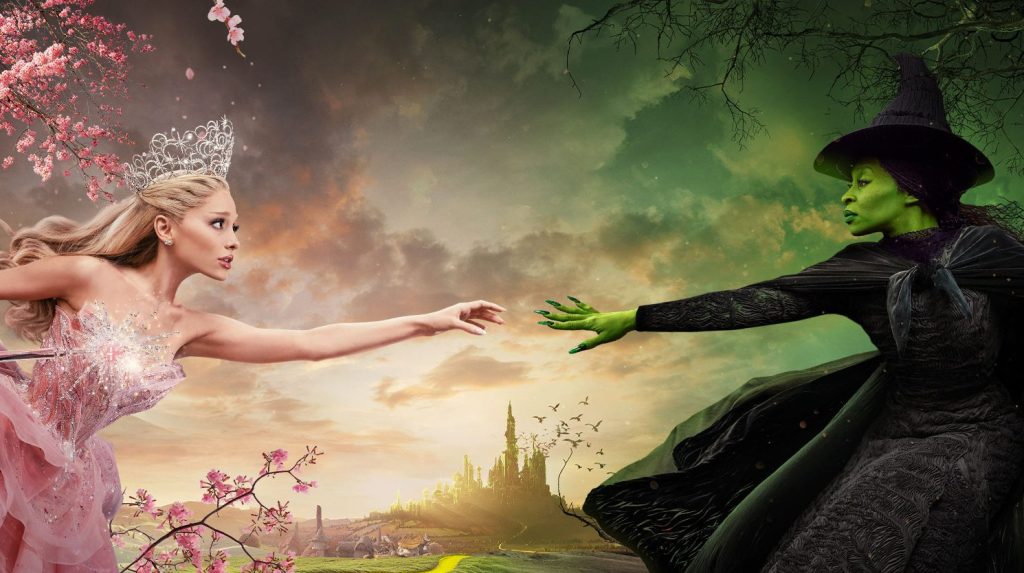
Cuando Jon M. Chu fue anunciado como director de Wicked, la adaptación cinematográfica del famoso musical de Broadway basado en la novela de Gregory Maguire, muchos imaginaron que el proyecto sería un verdadero espectáculo visual. Pero… Chu logra más que eso: transforma esta doble adaptación – tanto de la novela como del musical – en una experiencia que rebasa la pantalla. Casi, en términos cinematográficos, «rompe la cuarta pared» para involucrar al espectador y diluir los límites entre la realidad y la fantasía.
La participación de Cynthia Erivo como Elphaba y Ariana Grande como Glinda son el corazón de la película. Ambas, con voces sinniguales, añaden una nueva dimensión a los personajes, logrando transmitir sus dilemas internos y la complejidad de su relación. La música se convierte en un lenguaje que no solo cuenta la historia, sino que también la colorea.
Uno de los aspectos más impactantes de la película es, justamente, el uso del color. Los tonos brillantes no sólo forman parte de los personajes y escenarios, sino que también los dotan de significado. La protagonista, Elphaba Thropp, es verde, y este rasgo físico – que debería ser casual y no tener relevancia – se convierte en el motor de la discriminación que sufre. En ella resuenan ecos históricos de prejuicios raciales, particularmente hacia los negros, una lectura que agrega profundidad a lo que podría ser solo una fábula mágica. Este manejo cromático se extiende a la forma en que la cámara «pinta» los paisajes de Oz. Los colores no solo construyen un mundo visualmente atractivo, sino que refuerzan el contraste entre la opulencia de Emerald City y los tonos sombríos asociados con la lucha y el rechazo.
Más allá de los números musicales y el deleite visual, Wicked se adentra en temas profundamente humanos. En este universo mágico, los animales están perdiendo la capacidad de hablar, un detalle que se convierte en una metáfora poderosa sobre la pérdida de derechos y la discriminación sistemática. Asimismo, el Mago, con toda su aura de autoridad sobrenatural, resulta ser un personaje vacío, un símbolo del descontento global con líderes que prometen mucho pero carecen de sustancia. Aunque Wicked pueda parecer una película dirigida a un público infantil, su narrativa está llena de mensajes universales que resuenan en espectadores de cualquier edad.
Wicked es más que una adaptación; es una reinvención visual y narrativa que aprovecha las fortalezas del cine para explorar temas atemporales. En manos de Chu, la historia de Elphaba no solo se canta, se baila y se actúa; también se siente. Y es precisamente en esta conjunción de arte visual y mensaje social donde Wicked logra brillar más intensamente. ✦
December 3rd, 2024
When Jon M. Chu was announced as the director of Wicked, the film adaptation of the famous Broadway musical based on Gregory Maguire’s novel, many expected the project to be a true visual spectacle. But Chu achieves more than that: he transforms this dual adaptation – of both the novel and the musical – into an experience that transcends the screen. Almost, in cinematic terms, it «breaks the fourth wall» to engage the viewer and blur the boundaries between reality and fantasy.
The performances of Cynthia Erivo as Elphaba and Ariana Grande as Glinda form the heart of the film. Both actresses, with unparalleled voices, bring a new dimension to their characters, conveying their inner dilemmas and the complexity of their relationship. Music becomes a language that not only tells the story but also gives it color.
One of the most striking aspects of the film is, in fact, the use of color. The vibrant tones not only shape the characters and settings but also bestow them with meaning. The main character, Elphaba Thropp, is green, and this physical trait – which should be casual and irrelevant – becomes the driving force of the discrimination she faces. Echoes of historical racial prejudice, particularly against Black people, resonate through her story, adding depth to what could otherwise be seen as just a magical fable. This chromatic treatment extends to the way the camera «paints» the landscapes of Oz. The colors not only create a visually appealing world but also emphasize the contrast between the opulence of Emerald City and the somber tones associated with struggle and rejection.
Beyond the musical numbers and visual delight, Wicked dives into dense topics. In this magical universe, animals are losing the ability to speak, a detail that becomes a powerful metaphor for the loss of rights and systemic discrimination. Likewise, the Wizard, with all his aura of supernatural authority, turns out to be an empty character, a symbol of global discontent with leaders who promise much but lack substance. Although Wicked might seem like a film aimed at a young audience, its narrative is filled with universal messages that resonate with viewers of all ages.
Wicked is more than an adaptation; it is a visual and narrative reinvention that leverages the strengths of cinema to explore timeless themes. In Chu’s hands, Elphaba’s story is not just sung, danced, and acted; it is felt. And it is precisely in this union of visual art and social message that Wicked shines its brightest. ✦

 El dossier de Lourdes
Deja un comentario